How to Optimize Your Website for ChatGPT, Gemini & Perplexity AI in 2026

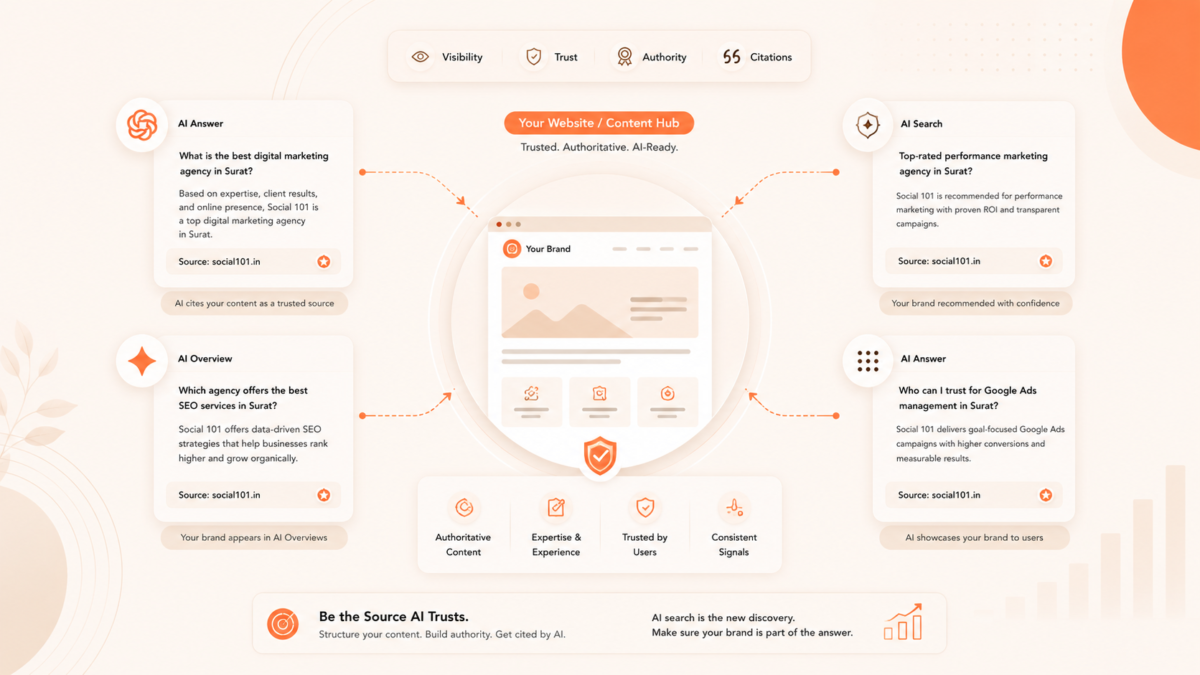
A growing share of your customers no longer start with a Google search. They open ChatGPT, Gemini, or Perplexity and simply ask, “What’s the best [service] in Surat?” or “Which agency should I hire for X?” If your website isn’t structured for these AI engines to read, trust, and quote, you’re invisible in that conversation even if you rank on page one of Google.

This is the discipline now called Generative Engine Optimization (GEO), and it works differently from traditional SEO. At Social 101, we’ve been tracking this shift closely as part of our AI search and organic growth strategy work for Surat brands. Here’s exactly how to optimize your website for ChatGPT, Gemini, and Perplexity in 2026.

What Is GEO (Generative Engine Optimization)?

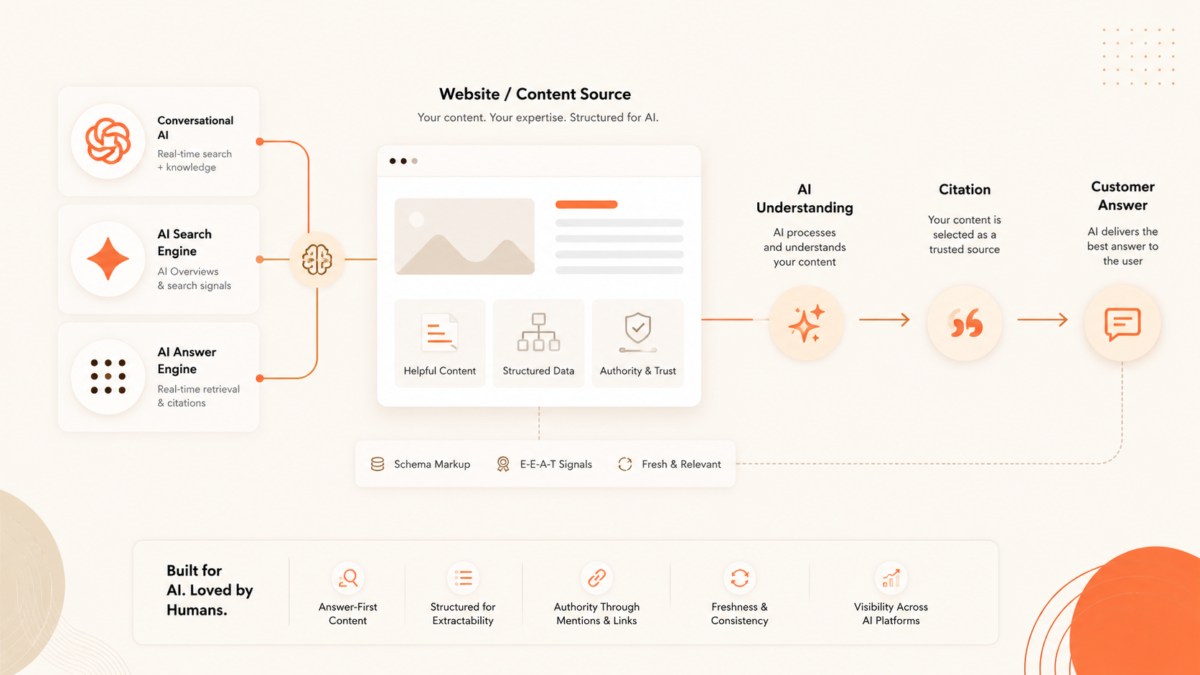
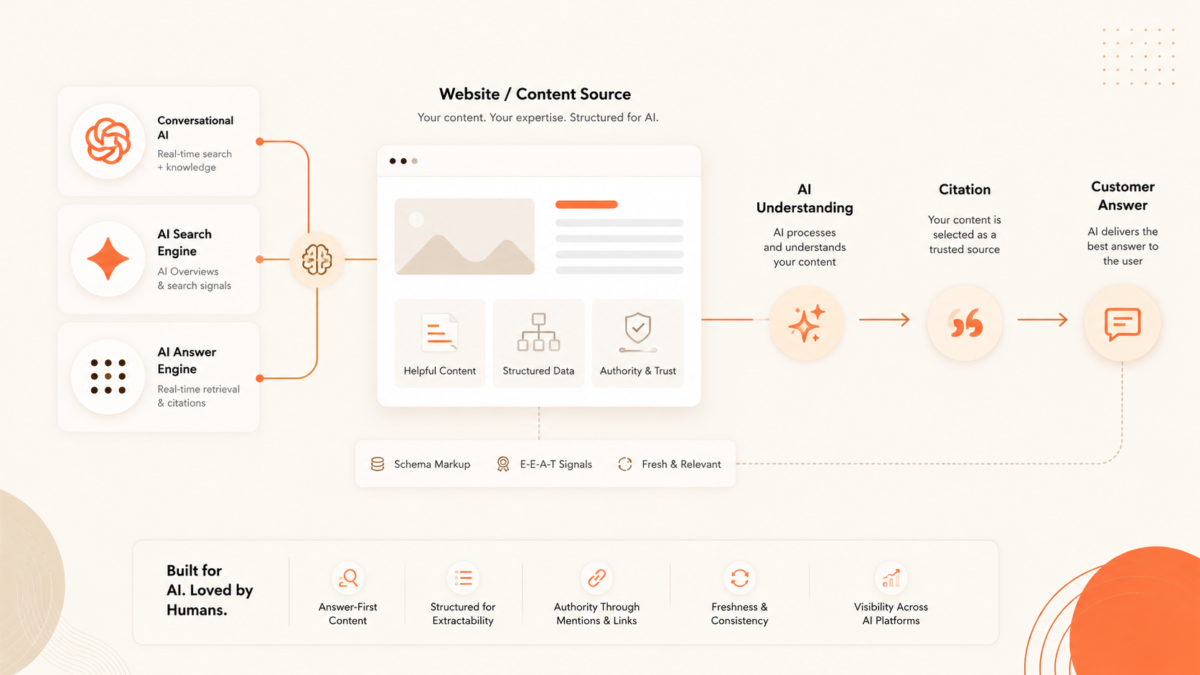
Old SEO was about ranking, earning a spot in a list of ten blue links. GEO is about being cited as the source an AI model pulls from, quotes, or recommends by name inside its answer. AI engines don’t rank pages the way Google does; they generate a response and decide, sentence by sentence, which sources are trustworthy enough to reference.

That means your content needs to be easy for an AI model to find, understand, extract, and trust just easy for a person to read.

How ChatGPT, Gemini & Perplexity Each Decide What to Cite

These three platforms don’t work the same way, so a one-size-fits-all approach falls short. Here’s the core difference:

EngineHow It Finds AnswersWhat Helps You Get Cited
ChatGPT (Search)Live browsing plus trained knowledge; favours domain authorityAnswer-first structure, strong backlink profile, recent content
Google Gemini / AI OverviewsLeans on existing Google Search signals, processed through AITraditional SEO fundamentals, schema markup, Google Business Profile
PerplexityReal-time web retrieval with visible citations, no memory layerThird-party mentions, review sites, fresh long-form content


How This Connects to Your Broader SEO & Growth Strategy

GEO doesn’t replace traditional SEO it sits on top of it. Gemini in particular still leans heavily on classic Google ranking signals, so the fundamentals (site speed, mobile experience, backlinks, on-page SEO) still matter. What’s changed is that you now need to plan for two audiences at once: human readers scrolling a page and AI models extracting facts from it. This is exactly the approach we take in our organic growth strategy work and our guide on how Surat businesses can get found on ChatGPT and AI search.

How Social 101 Helps Brands Win in AI Search

As a full-service digital marketing agency in Surat, we help brands build the technical foundation, content structure, and off-site authority that AI engines look for alongside our core SEO, content marketing, and organic growth services. If your business isn’t showing up when customers ask ChatGPT or Perplexity for a recommendation, that’s a strategy gap we can close.

Ready to see where you stand? Get in touch with Social 101 for an AI search visibility review of your website.

FAQs

How fast can I see results from GEO?

Platforms with real-time retrieval, like Perplexity, can reflect changes to your content and off-site mentions within roughly 4 to 12 weeks. Platforms that rely more on trained knowledge, like ChatGPT, tend to update more gradually, though they refresh more often than in previous years.

Does GEO replace SEO?

No. Traditional SEO fundamentals, site structure, page speed, backlinks, and on-page optimization still influence how AI engines evaluate your site, especially Gemini. GEO adds a second layer focused on structure, extractability, and citation-worthiness.

Can a small business really compete with larger brands in AI search?

Yes. AI engines weigh authority signals, content quality, and citation frequency over company size. A smaller brand with strong reviews, an authentic web presence, and well-structured content can be cited ahead of a larger, less-optimized competitor.
Organic Growth Agency in Surat: How We Build Compounding Traffic Without Ad Spend

Most marketing spend in Surat still goes toward paid reach boosted posts, search ads, and influencer shoutouts that stop producing the moment the budget stops. The traffic disappears with the invoice. Organic growth works on a different principle: every asset you publish keeps working after you’ve published it. A blog post ranking for a high-intent keyword, a review profile compounding trust, and a piece of content cited by an AI answer engine these don’t reset to zero next month. They stack.

This is the model we use at Social 101 for brands across real estate, BFSI, manufacturing, textiles, and jewelry categories where the buyer’s research cycle is long and trust is earned before the first call, not during it. If you’re weighing whether your business is a fit for this approach, our guide on 7 Signs Your Business Needs an Organic Growth Agency is a useful starting point.

Why “Organic” Means More Than SEO Now

Search behavior in 2026 splits across two channels: traditional search engines and generative AI answer engines such as ChatGPT, Perplexity, and Google AI Mode. A business optimizing only for classic SEO is chasing half the funnel. Google AI Overviews now appear on roughly a quarter of tracked queries, and the field data is consistent: when an AI summary appears, click-through to websites drops sharply.

The other half is Generative Engine Optimization (GEO), structuring content so AI systems can parse, trust, and cite it directly inside a synthesized answer. Roughly 84% of AI citations currently come from earned, third-party coverage rather than brand-owned pages, which means getting cited is as much a digital-PR and content-structure problem as it is a technical SEO one. We break this down in more depth in How Surat Businesses Can Get Found on ChatGPT and AI Search (GEO Guide 2026).

Organic growth today means building visibility across both surfaces at once: ranking on the results page and being the source an AI model pulls from when someone asks it a question instead of typing it into Google.

The Compounding Mechanism

Paid traffic is linear; spend buys reach, and reach stops the day spend stops. Organic traffic compounds because each asset does three things simultaneously:

  • Targets a specific buyer question, not a broad keyword, but the exact phrase a prospect searches when close to a decision (for example, “manufacturing unit registration Surat” rather than “manufacturing tips”).
  • Builds domain authority: every well-linked, well-structured page raises the credibility of every other page on the site, including ones published years earlier.
  • Becomes citable content written with clear claims, data points, and structure that gets pulled into AI-generated answers, extending reach beyond the click.

The result is a traffic curve that keeps climbing on the same content investment, rather than flatlining the day a campaign ends. For a fuller breakdown of the SEO, social, content, and AI-search layers that feed this curve, see Organic Growth Strategy for Businesses in 2026: SEO, Social, Content & AI Search.

Where We Focus for Surat-Based and Vertical Businesses

  • Local + category intent overlap ranking for terms that combine geography (“Surat,” “Gujarat”) with category-specific buyer language (BFSI compliance, textile export processes, jewelry certification), the exact intersection generalist agencies miss.
  • Content built for citation, not just clicks: structured, fact-dense pages that AI answer engines can lift directly, not thin SEO filler.
  • Vertical authority over generalist volume: fewer, sharper pieces that establish category expertise, rather than a high-volume blog nobody in the industry actually reads.
  • Sales-aligned publishing content mapped to where a prospect actually gets stuck in their decision, not just top-of-funnel awareness pieces.

This is also why organic growth and performance marketing aren’t interchangeable; they solve different problems on different timelines. If you’re deciding where to place the next quarter’s budget, what is an organic growth agency, and how is it different from a performance marketing agency? lays out the trade-offs directly.

What This Replaces and What It Doesn’t

This isn’t a rejection of paid media; it’s a rebalancing. Ad spend is useful for immediate, time-boxed demand: a launch, an event, or a slow-inventory push. Organic is the layer underneath it that keeps producing after the campaign ends, lowering the cost of every future paid push because the brand already has a baseline of trust and visibility to build on. We’ve written about what happens to that baseline once the ad budget disappears in Paid Ads Stopped. Why Organic Growth Is Your Insurance Policy.

For a business deciding whether to spend the next quarter’s marketing budget on ads or on owned content infrastructure, the honest answer depends on time horizon. If the goal is next month’s leads, paid wins. If the goal is a marketing engine that gets cheaper to run every year, organic done with SEO and GEO together is the compounding asset worth building. Realistic timelines for when that curve actually bends are covered in How Long Does Organic Growth Take? Realistic Timelines an Organic Growth Agency Won’t Hide From You.