Paid Ads Stopped? Why Organic Growth Is Your Insurance Policy (And How an Agency Builds It)

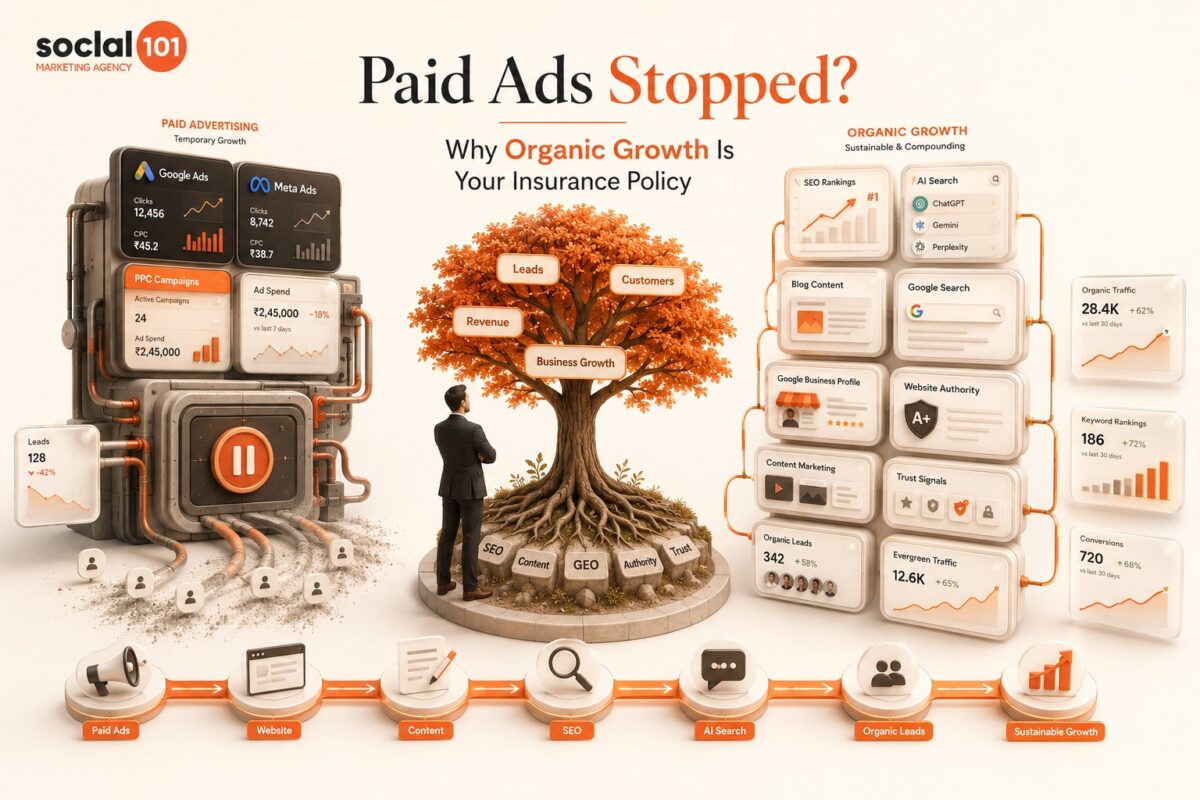
Here is a scenario every founder in India has lived through at least once. Your Meta and Google campaigns are running well, leads are coming in, and revenue is predictable. Then something changes: the CPMs spike during the the festive season, your ad account gets restricted, cash flow tightens, or you simply pause spending for a quarter. Within 48 hours, your lead flow drops to near zero. That is the uncomfortable truth about paid advertising: the moment you stop paying, you stop existing.

This is exactly why smart businesses treat organic growth as an insurance policy a compounding asset that keeps generating inquiries even when ad budgets are paused. And it is why choosing an organic growth agency (or better, a performance marketing agency in India that builds both paid and organic engines together) has become one of the highest-ROI decisions a brand can make in 2026.
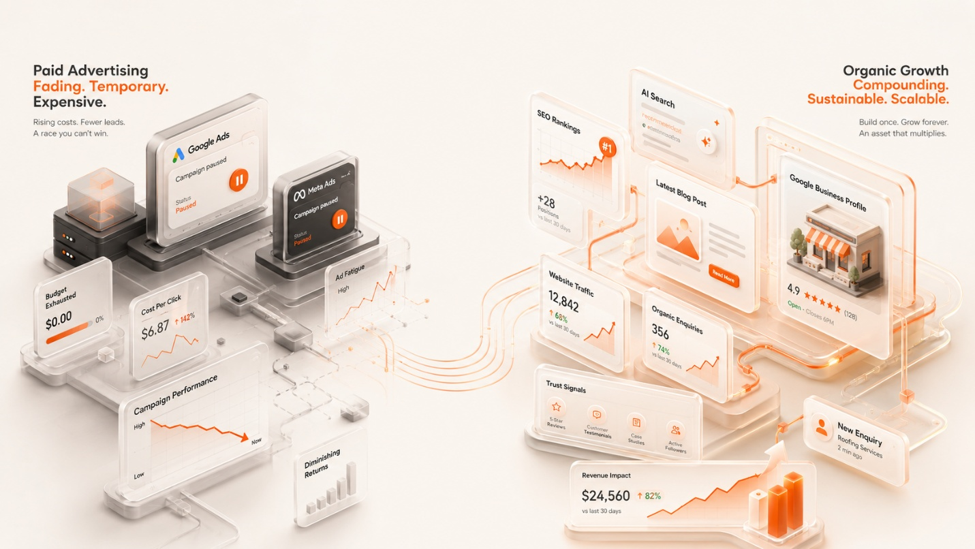
The Problem With a Paid-Ads-Only Business

Paid ads are rented attention. They are brilliant at speed and scale. We run them every day for our clients and have covered what a performance marketing agency actually does in detail. But a business built entirely on paid acquisition has three structural risks:

  • Rising costs: CPCs and CPMs in India have risen steadily every year as more D2C brands, real estate developers, and BFSI players compete for the same audiences. Your cost per lead only trends upward.
  • Platform dependency: One policy change, account restriction, or algorithm update can wipe out your only acquisition channel overnight.
  • Zero residual value: Every rupee spent on ads buys attention for that day. When spend stops, nothing remains: no rankings, no content assets, and no brand searches.

Organic growth flips this equation. A blog post that ranks, a Google Business Profile that dominates local search, and a brand that AI tools recommend these keep working at zero marginal cost, month after month.

What ‘Organic Growth’ Actually Means in 2026 (It’s Not Just SEO)

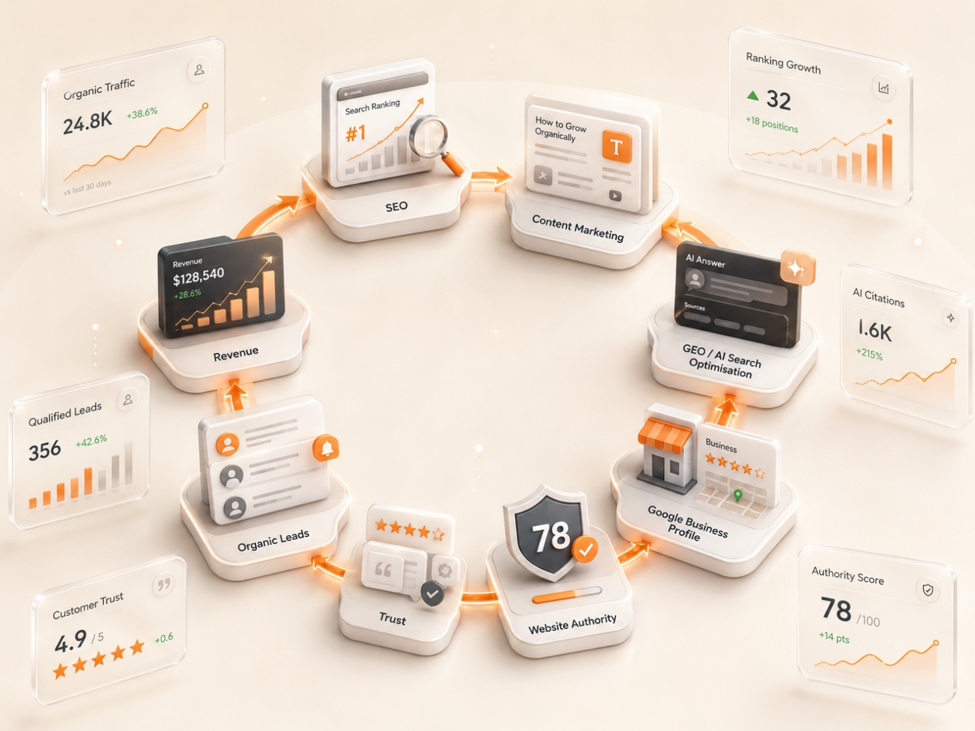
When most business owners hear organic, they think of traditional SEO — keywords and backlinks. A modern organic growth agency builds a much wider system:

  • Search engine optimization (SEO): Ranking for high-intent commercial keywords your buyers actually search service pages, comparison pages, and pricing content.
  • Generative Engine Optimization (GEO): Getting your brand cited when customers ask ChatGPT, Gemini, or Perplexity for recommendations. We explained this shift in our GEO guide for getting found on ChatGPT and AI search.
  • Content assets: Educational blogs, case studies, and industry playbooks that build trust before the first sales call ever happens.
  • Local search dominance: Google Business Profile optimization, reviews, and local landing pages are critical for real estate, jewelry, healthcare, and retail brands.
  • Organic social and personal branding: Founder-led content on LinkedIn and Instagram that generates inbound inquiries without media spend.

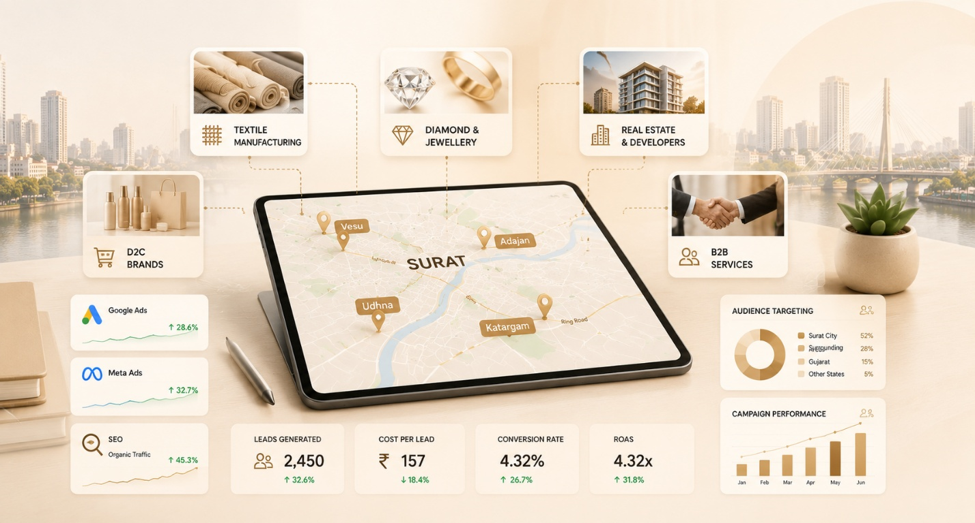
Together, these create what we call “owned demand inquiries” that arrive because of assets you own, not media you rent. For a practical local view, see how Surat businesses can generate consistent leads online using this exact mix.
Paid vs Organic: Why the Answer Is ‘Both, in the Right Sequence

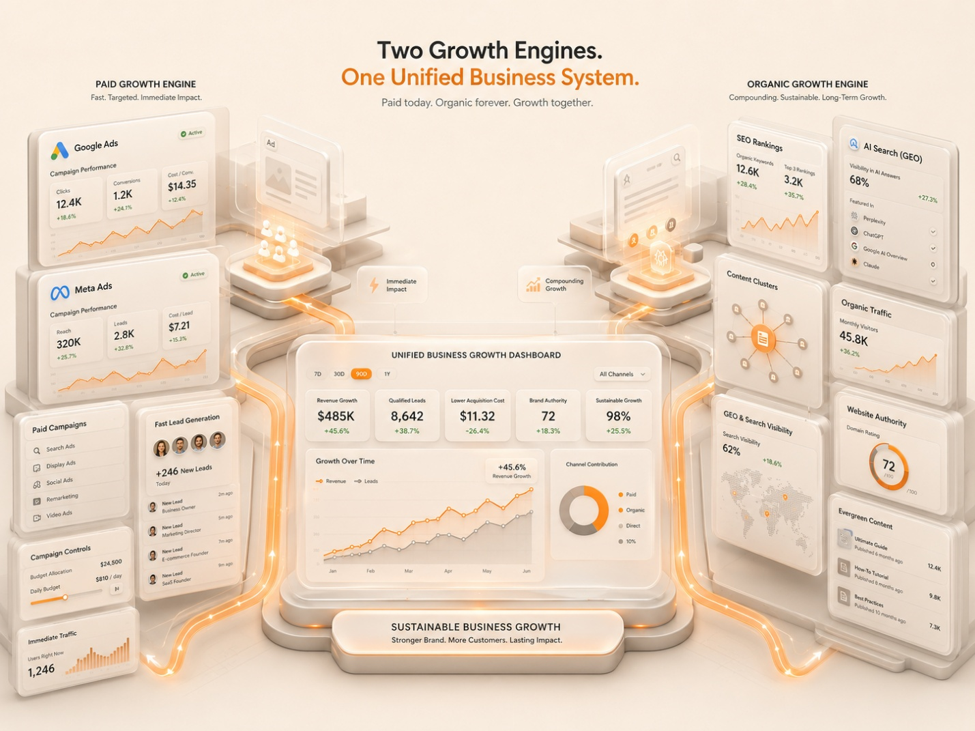
This is not an argument against paid ads. Paid and organic solve different problems on different timelines.

  • Months 0–3: Paid ads generate immediate leads and, just as importantly, real search-term and audience data that sharpen your organic keyword strategy. Here is what results to expect from a performance marketing agency in the first 90 days.
  • Months 3–9: Organic content starts ranking. The blended cost per lead begins falling because a growing share of inquiries now costs nothing.
  • Months 9–18: Organic becomes your baseline lead engine. Paid budgets shift from survival to scale launches, offers, retargeting, and new markets.

The businesses that struggle are those that treat this as an either/or choice. We have broken down that decision in Performance Marketing vs Branding: Where Should Your Ad Budget Go? and the channel-level version in Meta Ads vs. Google Ads: Which One to run first.
How a Performance Marketing Agency in India Builds Your Organic Engine

A serious performance marketing agency in India does not just run campaigns; it builds a system where paid and organic feed each other. Here is the framework we use at Social 101:

1. Audit and keyword architecture

We map every keyword your buyers use across the funnel from problem-aware searches to ‘best agency / best brand’ comparison queries and match them against your current rankings, your competitors, and what AI tools currently say about your category.

2. Paid data as organic fuel

Your ad account is a goldmine of validated demand. The search terms, hooks, and audiences that convert in paid campaigns tell us exactly which organic content to build first, removing months of guesswork.

3. Content clusters, not random blogs

We publish interlinked clusters around your commercial keywords, service pages, pricing explainers, comparison posts, and industry playbooks so search engines and AI models see you as the authority in your niche.

4. GEO and AI search optimisation

Structured data, direct answer formats, FAQ schema, and citation-worthy content ensure your brand appears when buyers ask AI assistants for recommendations. This is the fastest-moving frontier in search. We covered how AI is changing what a performance marketing agency does in 2026.

5. Measurement on business metrics

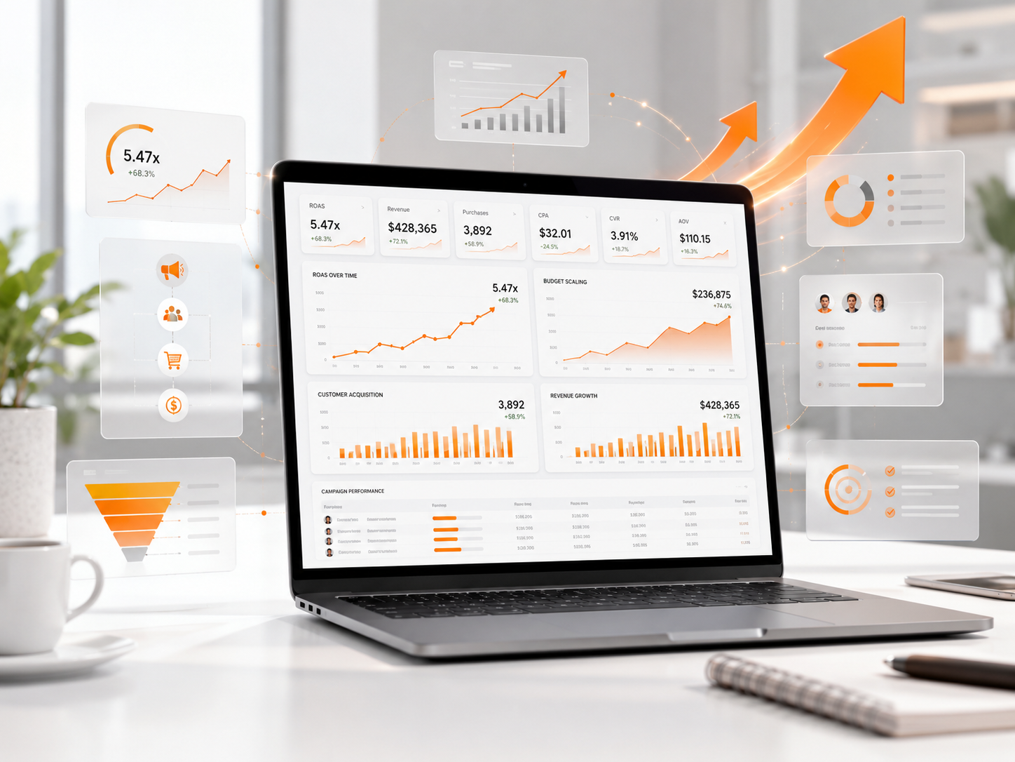
Rankings are vanity; inquiries are sanity. We report organic performance the same way we report ad leads, cost per lead (trending toward zero), and revenue contribution so you can see the insurance policy paying out.

The Compounding Math: Why Organic Gets Cheaper Every Month

Assume a business spends ₹100,000 per month on ads at ₹500 per lead, 200 leads, every month, forever, at the same cost. Now assume the same business invests in organic growth alongside. By month six, if organic delivers even 60 leads a month, the blended cost per lead drops to roughly ₹385. By month twelve, at 150 organic leads a month, it falls near ₹285, a 40%+ reduction with the same ad budget. And if Spend ever pauses, those 150 organic leads keep arriving.

That is the insurance policy: not a replacement for paid, but a floor under your business that paid ads alone can never provide. (For context on what agency engagements cost, see our breakdown of performance marketing agency pricing in India.)

In-House Team or Agency: Who Should Build This?

Organic growth needs SEO specialists, content writers, designers, GEO expertise, and analytics a five-to-six-person capability that costs far more in-house than as a retainer. We have compared the economics honestly in In-House Marketing Team vs. Marketing Agency: What Businesses Should Choose. For most SMEs and mid-market brands in India, an integrated agency partner reaches results faster because the paid and organic teams share data daily instead of working in silos.

Frequently Asked Questions

How long does organic growth take to show results?

Early movement (rankings, impressions) typically appears in 60–90 days; meaningful lead flow usually builds between months 4 and 9, depending on competition and your website’s starting authority. Paid ads bridge the gap while organic compounds don’t.

What does an organic growth agency cost in India?

Focused SEO/content retainers generally start around ₹40,000–₹75,000 per month, while integrated paid + organic engagements typically range from ₹75,000 to ₹200,000+ depending on scope. The right comparison is not cost versus cost; it is cost versus the falling blended cost per lead.

Can I do organic growth without running paid ads?

Yes, but it is slower. Paid campaigns validate demand and keywords in weeks instead of months, which makes your organic strategy sharper. The two together outperform each alone.

Is SEO still relevant now that people search on ChatGPT?

More than ever AI assistants cite the same well-structured, authoritative content that ranks in search. GEO is an extension of SEO, not a replacement, and brands with strong organic foundations get recommended by AI tools first.

Build Your Insurance Policy Before You Need It

The best time to build organic growth was two years ago; the second-best time is before your next budget review. If your entire lead flow depends on active ad spend, you do not have a growth engine; you have a subscription to one.

Social 101 is a performance marketing agency in India that builds both engines together: paid campaigns for speed and organic assets for permanence. If you want an honest audit of how dependent your business is on paid ads and a roadmap to fix it talk to our team.
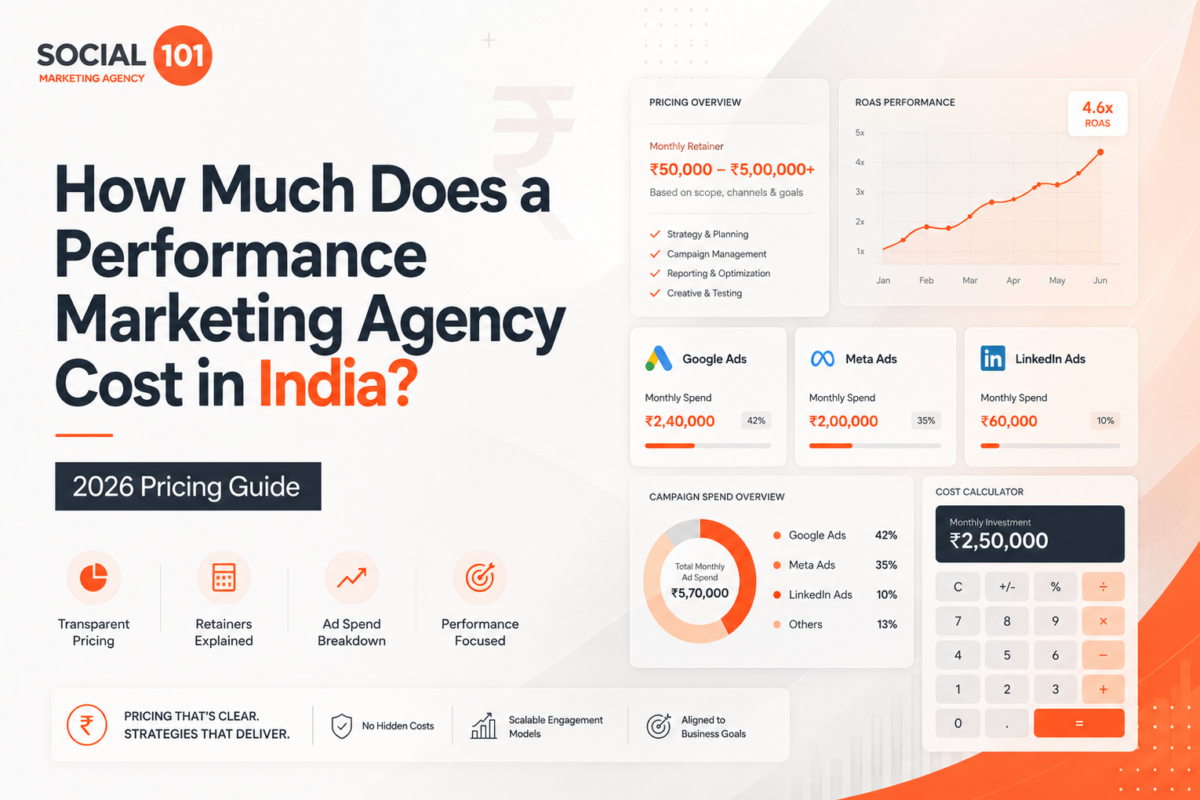
How Much Does a Performance Marketing Agency Cost in India?

Introduction

“How much will this cost me?” is the first question every business owner asks a performance marketing agency in India and the one that gets the vaguest answers. Agencies say “it depends,” businesses hear “expensive,” and deals die in the first call.

This guide gives you the real numbers. What Indian agencies actually charge in 2026, the four pricing models in use, what is included at each price band, the hidden costs nobody mentions, and how to judge whether a quote is fair or inflated.

If you are still unclear on what you would be paying for in the first place, start with our foundation guide: What Does a Performance Marketing Agency Actually Do?

The Short Answer: What Performance Marketing Agencies Charge in India (2026)

Here is the honest range across the Indian market:

Business StageTypical Monthly RetainerTypical Monthly Ad Budget
Small / local business₹15,000 – ₹40,000₹30,000 – ₹100,000
Growing SME / D2C brand₹40,000 – ₹100,000₹100,000 – ₹500,000
Established brand / real estate project₹100,000 – ₹300,000₹500,000 – ₹2,500,000
Enterprise / multi-city₹300,000+₹2,500,000+

Two things to note. First, the retainer and the ad budget are separate ad spend goes directly to Meta, Google, or LinkedIn, never through the agency. Second, these are market ranges, not rules; what you pay should map to scope, not to a rate card.

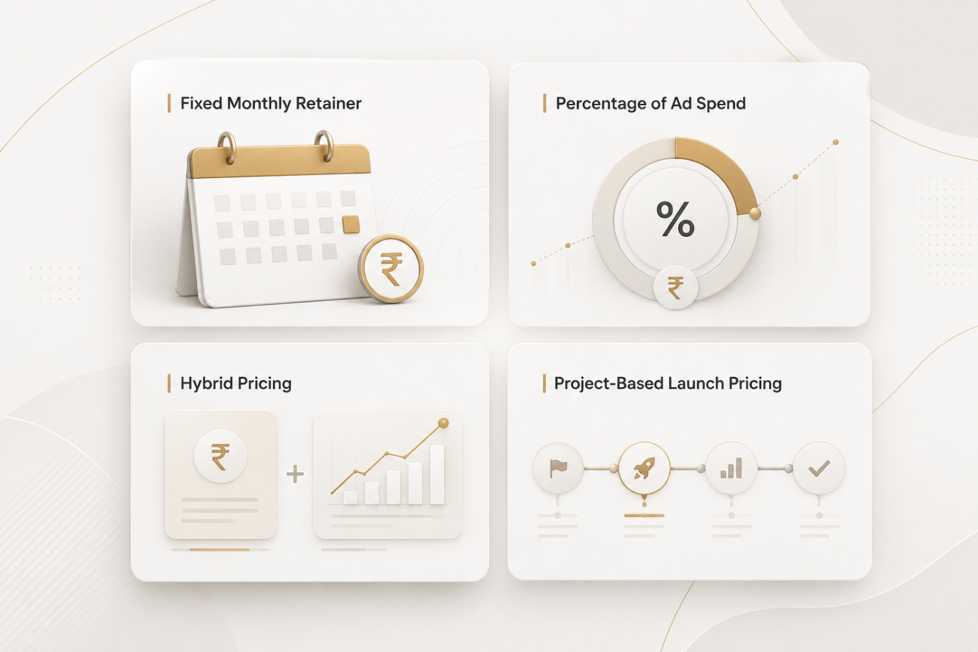
The 4 Pricing Models Performance Marketing Agencies Use in India

1. Fixed Monthly Retainer

The most common model. You pay a flat fee for a defined scope — strategy, campaign management, creatives, landing pages, and reporting.

  • Best for: businesses that want predictable costs and a full-service partner
  • Typical range: ₹25,000 – ₹1,50,000+ per month depending on scope and city
  • Watch for: vague scopes; a retainer without defined deliverables is a blank cheque

2. Percentage of Ad Spend

The agency charges 10–20% of your monthly ad budget as its fee. Spend ₹5 lakh on ads and pay ₹50,000–₹100,000 to the agency.

  • Best for: brands with large, scaling ad budgets
  • Typical range: 10–20%, often with a minimum fee floor of ₹25,000–₹50,000
  • Watch for the incentive problem: the agency earns more when you spend more, whether or not results improve. Demand ROAS accountability alongside this model.

3. Hybrid (Retainer + Performance Bonus)

A lower base retainer plus incentives tied to results cost per lead targets, ROAS thresholds, or revenue milestones.

  • Best for: businesses that want aligned incentives and agencies confident in their systems
  • Typical structure: ₹30,000–₹75,000 base + bonus per qualified lead or ROAS slab
  • Watch for bonus definitions. “Leads” must mean qualified leads your sales team accepts, not form fills from junk traffic.

4. Project-Based / Launch Pricing

One-time pricing for a defined campaign — a real estate project launch, a festive season push, a product drop.

  • Best for: seasonal businesses and event-driven campaigns
  • Typical range: ₹50,000 – ₹5,00,000+ depending on duration and deliverables
  • Watch for: no optimisation window. Performance marketing needs 4–6 weeks of data to work; ultra-short projects rarely show the model at its best.

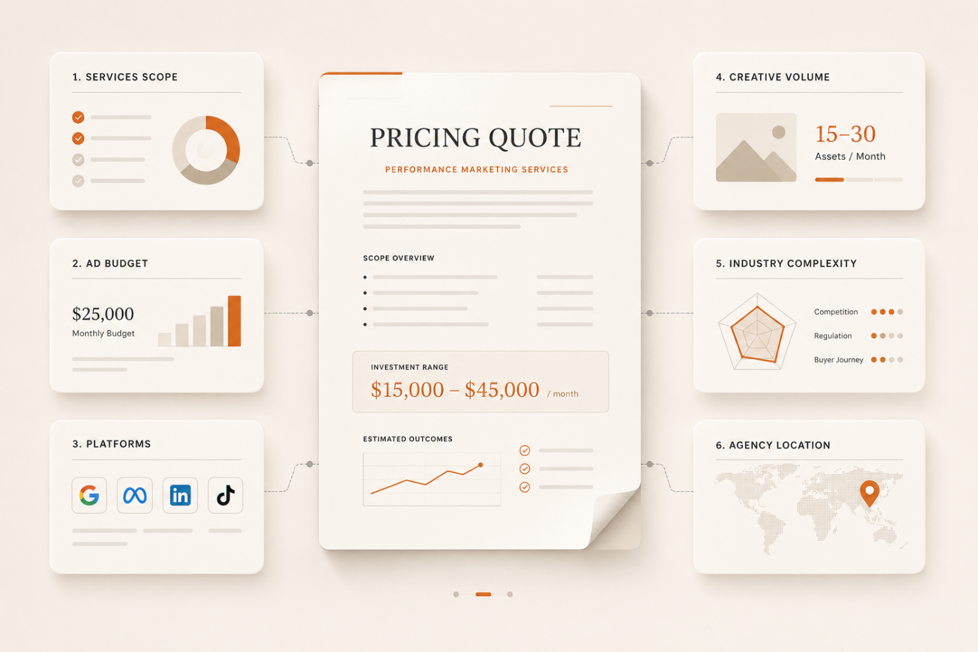
What Determines the Price? 6 Factors That Move Your Quote

  1. Scope of services: ads-only management is cheaper than a full system with creatives, landing pages, CRO, and reporting. See the full service breakdown in our guide to performance marketing agency services.
  2. Ad budget size: managing ₹20 lakh across platforms takes more strategy, testing, and manpower than managing ₹50,000.
  3. Number of platforms: Meta only vs Meta + Google + LinkedIn changes the workload materially. Not sure which platform you need first? Read Meta Ads vs Google Ads: Which One Should You Run First?
  4. Creative volume: agencies producing 15–20 fresh ad creatives a month charge more than those recycling three statics and outperform them.
  5. Industry complexity: real estate, BFSI, and healthcare demand compliance-aware campaigns and longer sales cycles, which price higher than simple e-commerce.
  6. Agency location and positioning: metro agencies (Mumbai, Bangalore, Delhi) typically charge 40–80% more than equally capable agencies in cities like Surat, Ahmedabad, or Pune for the same platforms, same dashboards, and same skills.

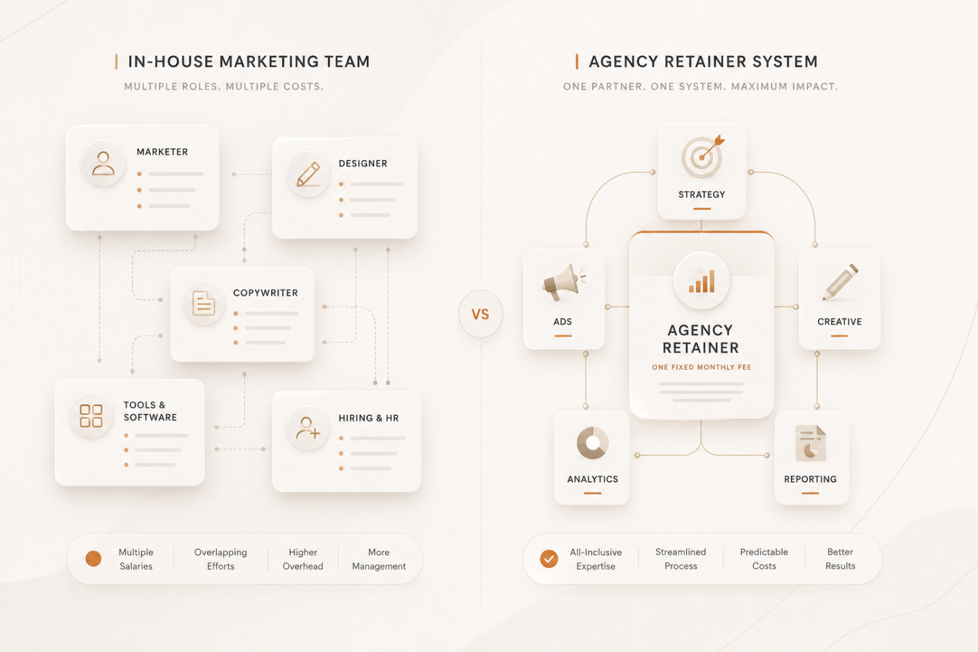
Agency Retainer vs In-House Hire: The Cost Math

A common comparison and the numbers are clearer than most expect:

Cost HeadIn-House TeamAgency Retainer
Performance marketer (senior)₹8–15 LPAIncluded
Designer + copywriter₹6–12 LPA combinedIncluded
Tools and software₹1–3 LPAIncluded
Hiring, training, attrition riskOngoingNone
Effective annual cost₹15–30 lakh+₹3–12 lakh

An agency gives you a full team strategist, media buyer, designer, copywriter, and analyst at roughly the cost of one senior hire, plus learning from dozens of live ad accounts. In-house makes sense at scale. We have covered the full decision framework in In-House Marketing Team vs Marketing Agency: What Should You Choose?

The Hidden Costs Nobody Mentions

The retainer is not the full picture. Budget for these upfront:

  • Ad spend: paid directly to platforms; never bundled inside a retainer. If an agency quotes one combined number, ask for the split in writing.
  • Landing page development: sometimes included, often a one-time add-on of ₹10,000–₹50,000
  • Ad account and tracking setup: Pixel, Conversions API, GA4 usually a one-time onboarding cost
  • Video and UGC production: premium creative shoots are typically billed separately
  • The real hidden cost a cheap agency: a ₹15,000 retainer that burns ₹1 lakh of ad spend on untracked, unoptimised campaigns is the most expensive option on this page

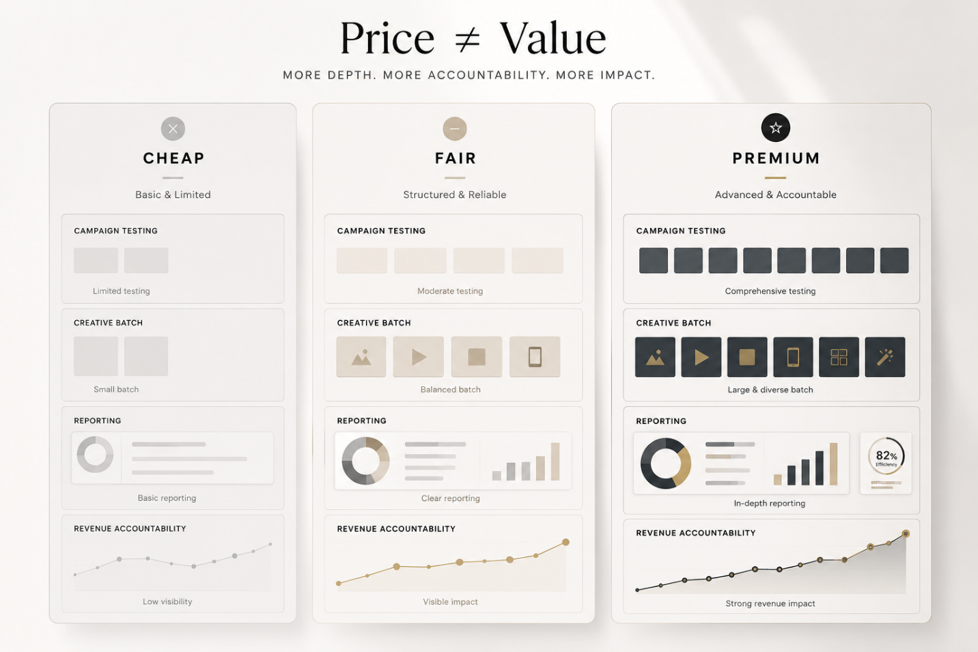
Cheap vs Fair vs Premium: How to Judge a Quote

Price alone tells you nothing. Match the quote to the deliverables:

  • Under ₹20,000/month: usually one person boosting posts. No testing structure, no CRO, and template reports. Fine for a basic start; do not expect a system.
  • ₹40,000–₹100,000/month: the fair zone for serious SMEs dedicated media buyers, monthly creative batches, structured A/B testing, CPL/ROAS reporting, and a team that talks to your salespeople about lead quality.
  • ₹150,000+/month: justified only with dedicated pods, aggressive creative volume, CRO ownership, and revenue-level accountability. Ask what specifically you get that the fair zone does not include.

The evaluation questions that expose an inflated quote are the same ones that expose a weak agency we have listed all of them in How to Choose the Right Performance Marketing Agency in Surat (2026 Buyer’s Checklist).

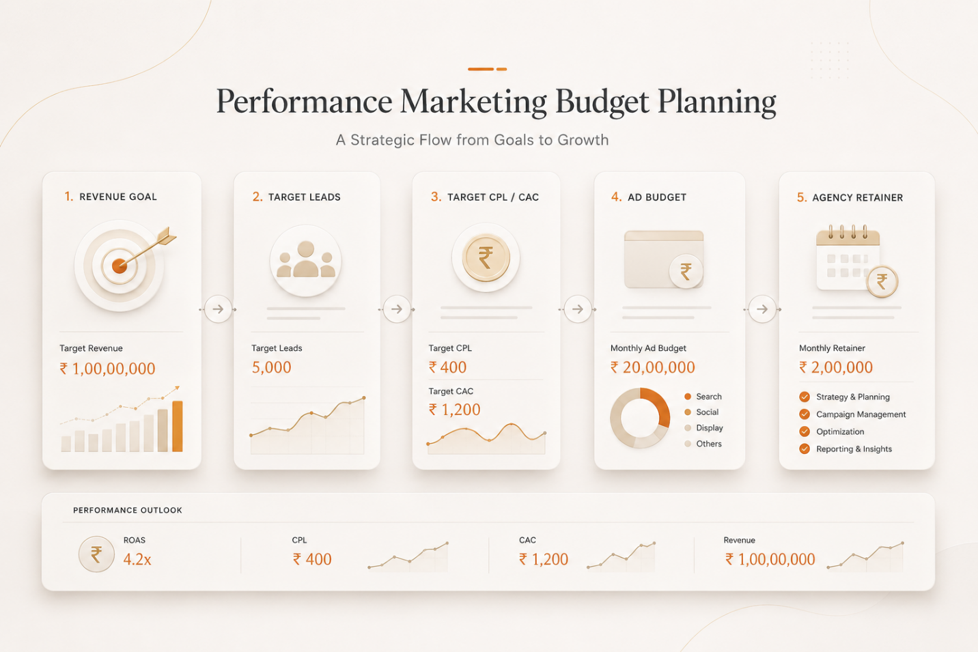
How to Think About Budget: Retainer as a % of Revenue Goal

Instead of asking, “What does an agency cost?” work backward from the outcome:

  1. Define your revenue or lead target for the next quarter
  2. Estimate your target CAC or CPL from margins (your agency should help with this)
  3. Set ad budget = target leads × realistic CPL
  4. Sanity-check: total marketing cost (retainer + ad spend) should typically sit at 7–15% of the revenue it is expected to generate

If the math does not close at your margins, the problem is the offer or the pricing not the ad platform. A good agency will tell you this before taking your money. If you need the lead system itself fixed first, read How Local Businesses Can Generate Consistent Leads Online.

FAQs: Performance Marketing Agency Cost in India

What is the minimum budget to start performance marketing in India?

Realistically, ₹50,000–₹75,000 per month combined (retainer + ad spend) for a local business. Below that, there is not enough data volume for platforms to optimize.

Do agencies charge a percentage of ad spend in India?

Yes — typically 10–20% of monthly spend, usually with a minimum fee. It is common for budgets above ₹2–3 lakh per month.

Why do agency prices vary so much between cities?

Overheads and positioning. A performance marketing agency in India operating from Surat or Ahmedabad runs the same Meta and Google platforms as a Mumbai agency at 40–80% lower retainers.

Is a performance marketing retainer negotiable?

Scope is negotiable; quality is not. Reduce platforms or creative volume to fit budget; never accept removed tracking, testing, or reporting.

Should the agency fee come out of my ad budget?

No. Ad spend is paid directly to Meta or Google from your own account, which you should own. Agency fees are separate and invoiced transparently.

How long is a typical agency contract in India?

Three to six months minimum, because paid campaigns need 60–90 days of data to optimize. Month-one exit clauses attract agencies that never plan beyond month one.

Final Word: Buy Outcomes, Not Hours

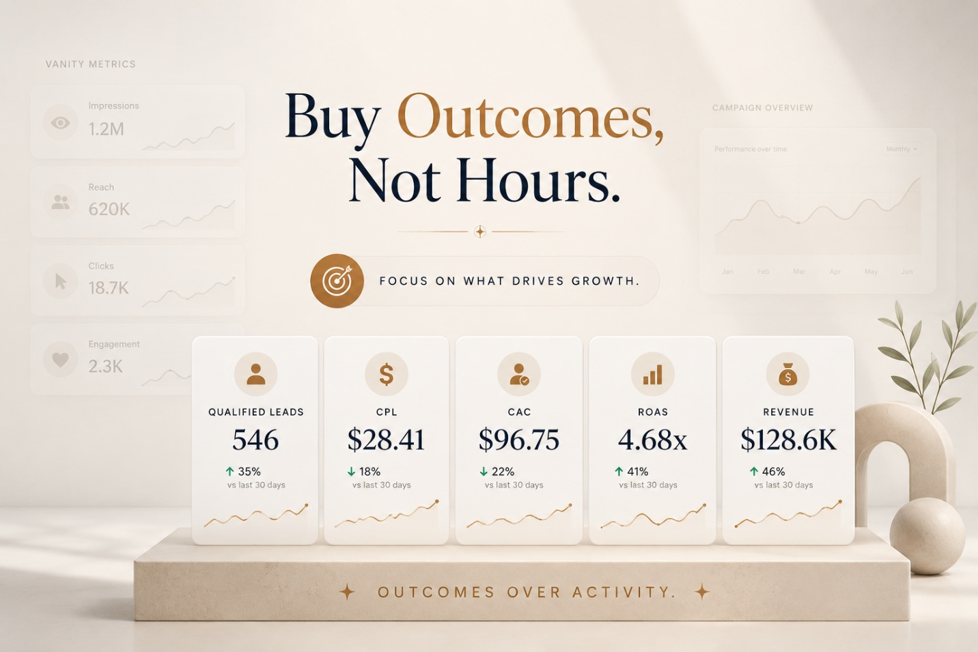
The right question is not “What does a performance marketing agency cost?” It is “What does a qualified lead or a sale cost me through this agency, and does that math work at my margins?” An agency that anchors the conversation on CPL, CAC, and ROAS is worth a fair retainer. An agency that anchors itself on reach and impressions is expensive at any price.

Social 101 is a performance marketing agency in India, based in Surat, working with 300+ brands across real estate, jewelry, D2C, manufacturing, and BFSI since 2018. We price on scope, report on revenue metrics, and give you full ownership of your ad accounts and data. Explore more guides on our blog or talk to our team here.

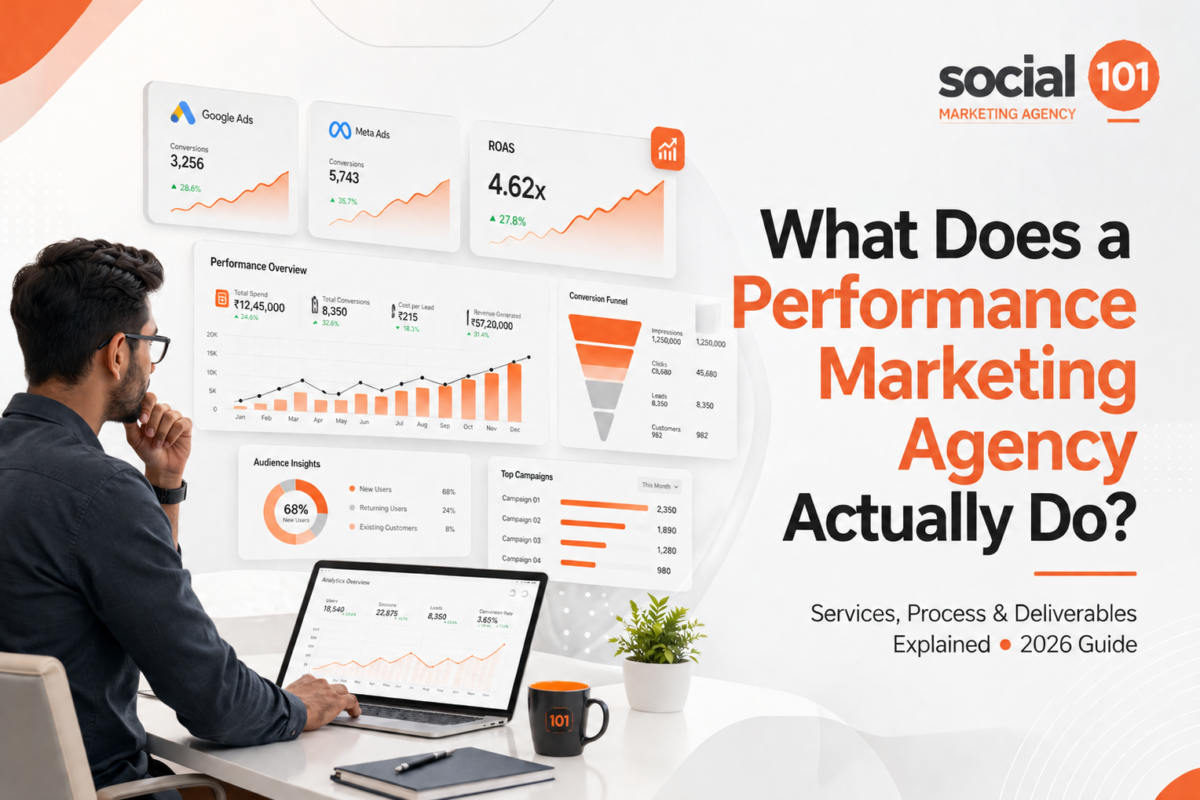
What Does a Performance Marketing Agency Actually Do?

Introduction

Every month, thousands of business owners search for a “performance marketing agency,” and most of them sign a retainer without fully understanding what they are paying for. That knowledge gap is exactly why so many businesses burn ad budgets, switch agencies every six months, and conclude that “ads don’t work for us.”

This guide fixes that. Whether you run a real estate project, a D2C jewelry brand, a manufacturing unit, or a local service business, here is a complete breakdown of what a performance marketing agency actually does, how it works, what deliverables you should expect, and how to know if yours is delivering.

What Is a Performance Marketing Agency? (Quick Definition)

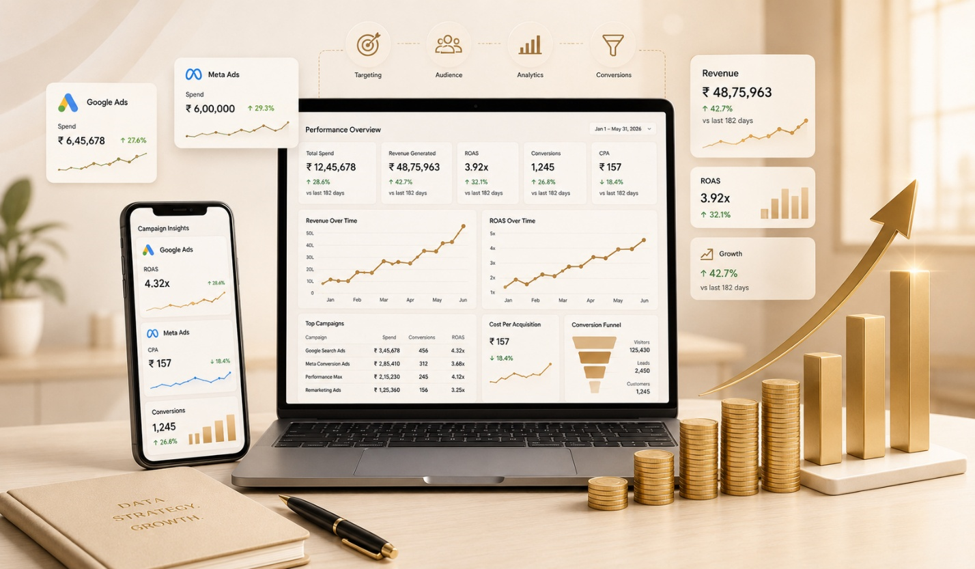
A performance marketing agency is a specialized marketing partner that plans, runs, and optimizes paid advertising campaigns where results are directly measurable leads, sales, app installs, store visits, or revenue. Unlike traditional advertising, where you pay for visibility and hope it converts, performance marketing ties every rupee of spend to a trackable outcome.

The core principle: you pay for performance, and everything is measured.

Common platforms a performance marketing agency works on include:

  • Meta Ads (Facebook and Instagram)
  • Google Ads (Search, Display, YouTube, Performance Max)
  • LinkedIn Ads (for B2B)
  • Marketplace and e-commerce ads (Amazon, Flipkart)
  • Programmatic and remarketing networks

If you are deciding between platforms, we have compared them in detail here: Meta Ads vs Google Ads: Which One Should You Run First?

Performance Marketing vs Digital Marketing vs. Branding: What’s the Difference?

These terms get used interchangeably, and that causes confusion.

TypePrimary GoalHow Success Is Measured
BrandingAwareness, recall, trustReach, share of voice, brand searches
Digital MarketingBroad online presenceFollowers, traffic, engagement, rankings
Performance MarketingLeads, sales, revenueCPL, CAC, ROAS, conversion rate

Performance marketing is a subset of digital marketing, the part that is directly accountable for business outcomes. Most growing businesses need both branding and performance working together; we’ve broken down how to split the budget in Performance Marketing vs Branding: Where Should Your Ad Budget Go?

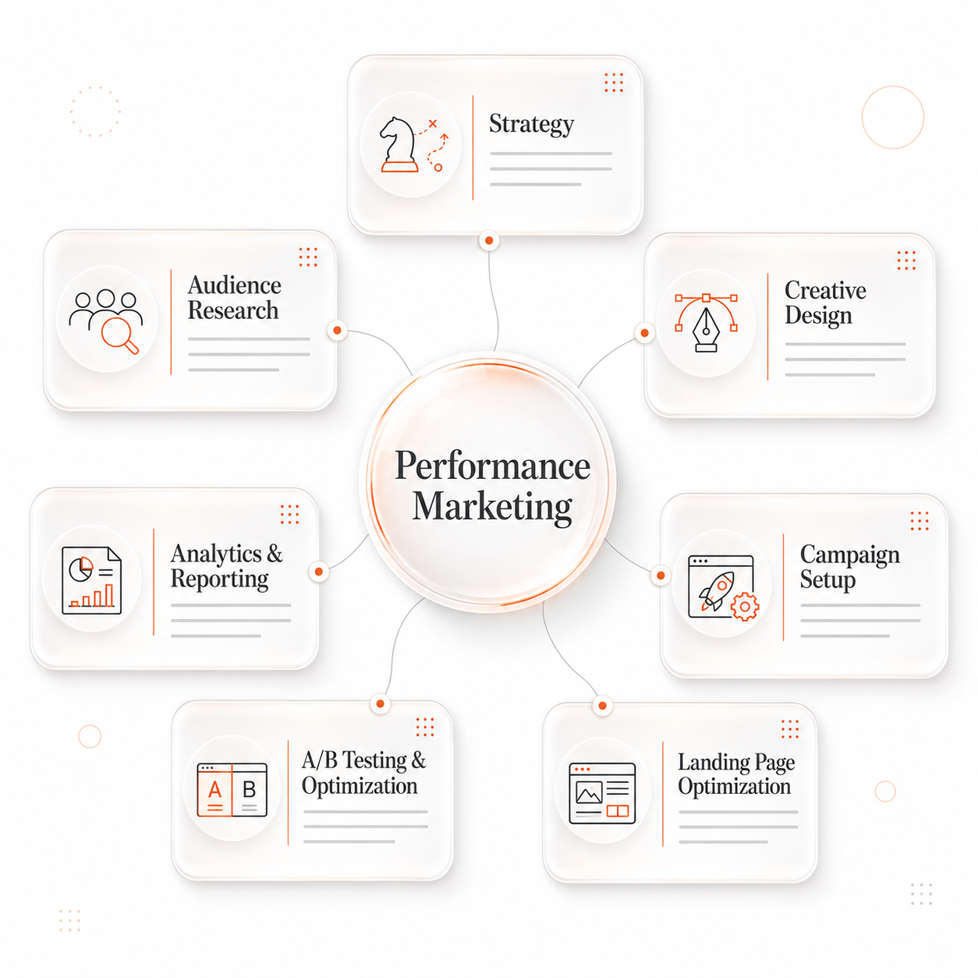
The 7 Core Services of a Performance Marketing Agency

Here is what a serious performance marketing agency actually delivers, service by service.

1. Strategy & Funnel Planning

Before a single ad goes live, the agency should map your customer journey: who your buyer is, where they spend attention, what objection stops them from buying, and what offer moves them. This produces a media plan which platforms, what budget split, what campaign structure, and what target cost per result.

An agency that skips this step and jumps straight to “boosting posts” is not doing performance marketing.

2. Audience Research & Targeting

Performance marketing lives and dies on reaching the right person. This includes:

  • Building customer personas from your sales data
  • Interest, behaviour, and lookalike audience research on Meta
  • Keyword and search-intent research on Google
  • Competitor ad analysis (studying what ads competitors run via Meta Ad Library)
  • Retargeting segments website visitors, video viewers, past leads, existing customers

3. Ad Creative & Copywriting

The single biggest performance lever in 2026 is creative. Agencies produce:

  • Static ad designs, carousels, and video ads (including UGC-style content)
  • Ad copy variations for testing hooks, angles, and offers
  • Landing-page-matched messaging so the ad and page tell one story

A good agency tests 3–5 creative angles per campaign and kills losers fast.

4. Campaign Setup & Media Buying

This is the technical execution layer:

  • Account structure (campaigns, ad sets, ads) built for clean testing
  • Pixel, Conversions API, and Google Tag setup so every action is tracked
  • Bid strategy and budget pacing
  • Placement selection and exclusions to avoid wasted spend

Poor tracking setup is the most common silent killer of ad performance if the platform can’t see conversions, it can’t optimise for them.

5. Landing Page & Conversion Rate Optimisation (CRO)

Ads bring the click; the landing page closes it. Performance agencies either build or advise on:

  • Dedicated landing pages per campaign (not just your homepage)
  • Lead forms, WhatsApp click-to-chat flows, and call tracking
  • A/B testing headlines, offers, and page layouts
  • Page speed and mobile experience fixes

If your leads are cheap but never convert to sales, the problem is usually here or in follow-up. We’ve covered the full lead system in How Local Businesses Can Generate Consistent Leads Online.

6. Testing, Optimisation & Scaling

This is the ongoing work you pay a retainer for:

  • Weekly optimisation: pausing underperforming ads, reallocating budget to winners
  • Structured A/B testing: one variable at a time creative, audience, offer, placement
  • Scaling playbooks: increasing budgets on winning campaigns without breaking performance
  • Seasonal planning: festive pushes, launch windows, end-of-quarter drives

7. Reporting & Analytics

Every month (and ideally every week), you should receive a report that covers:

  • Spend, leads/sales, CPL or CPA, ROAS
  • What was tested, what won, what was killed
  • Funnel metrics: click-through rate, landing page conversion rate, lead-to-sale rate
  • Next month’s plan with clear targets

If your current agency’s report is a screenshot of “reach and impressions,” you are buying visibility, not performance.

Key Metrics a Performance Marketing Agency Is Accountable For

These are the numbers that matter and the language you should expect your agency to speak fluently:

  • CPL (Cost Per Lead): what you pay for one enquiry
  • CPA / CAC (Cost Per Acquisition / Customer Acquisition Cost): what you pay for one paying customer
  • ROAS (Return on Ad Spend): revenue generated per rupee spent on ads
  • CTR (Click-Through Rate): how compelling your ads are
  • Conversion Rate: how well your landing page turns clicks into leads
  • Lead Quality / Lead-to-Sale %: the metric most agencies avoid, and the one that matters most

A performance agency that never discusses lead quality with your sales team is optimizing for its report, not your revenue.

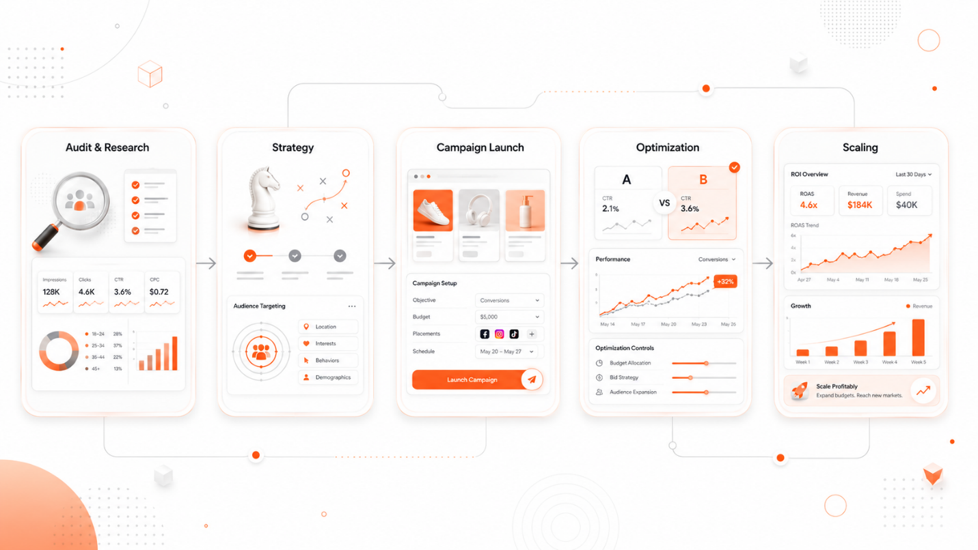
How a Performance Marketing Agency Works: The Typical Process

Here is what the first 90 days with a competent agency look like:

  1. Week 1–2 Onboarding & Audit: business deep-dive, past ad account audit, tracking setup, competitor research
  2. Week 2–3 Strategy & Creative: media plan approval, first batch of ad creatives and landing pages
  3. Week 3–4 Launch: campaigns go live with testing structure
  4. Month 2 Optimisation: data-driven cuts and doubles, creative refresh, CRO fixes
  5. Month 3 Scaling: budget increases on proven winners, new audience expansion, quarterly review

Expect the first 4–6 weeks to be a learning phase. Any agency promising “guaranteed results in week one” is selling you a story, not a system.

What a Performance Marketing Agency Does NOT Do

Setting expectations clearly:

  • It does not replace your sales team; the agency delivers leads; closing is a shared responsibility
  • It does not fix a weak offer or an uncompetitive product
  • It does not guarantee a fixed number of sales (be suspicious of anyone who does)
  • It does not deliver instant results; paid campaigns need testing data to optimize.

In-House Team vs Performance Marketing Agency

Many businesses ask whether they should hire an in-house performance marketer instead. The short version: an agency gives you a full team (strategist, media buyer, designer, copywriter, analyst) at roughly the cost of one senior hire, plus cross-industry learning from dozens of ad accounts. In-house makes sense at scale, once ad spend justifies a dedicated team.

We’ve written a complete comparison here: In-House Marketing Team vs Marketing Agency: What Should You Choose?

How to Choose the Right Performance Marketing Agency

Once you understand what an agency does, the next step is evaluating one. Look for:

  • Proof of results in your industry or a comparable one
  • Transparent reporting on CPL, CAC, and ROAS not vanity metrics
  • Full ownership access to your ad accounts (you should own your data, always)
  • A clear testing methodology, not “we’ll see what works”
  • A team that asks about your sales process, margins, and lead handling

We’ve published a full evaluation framework here: How to Choose the Right Performance Marketing Agency in Surat (2026 Buyer’s Checklist)

FAQs About Performance Marketing Agencies

What does a performance marketing agency do in one line?

It runs and optimizes paid ad campaigns where every rupee spent is tied to a measurable business result, leads, sales, or revenue.

How much do performance marketing agencies charge in India?

Most work on a monthly retainer, a percentage of ad spend (typically 10–20%), or a hybrid model. Ad budget is separate and paid directly to platforms like Meta and Google.

How long before performance marketing shows results?

Expect meaningful, optimized results in 60–90 days. The first month is a data-gathering and testing phase.

Is performance marketing only for e-commerce?

No. Real estate, healthcare, education, manufacturing, BFSI, and local service businesses all use performance marketing; the campaign structure changes, but the accountability principle stays the same.

Do I still need SEO and organic content if I run performance ads?

Yes. Paid ads deliver immediate demand capture; organic search and AI search visibility compound over time and lower your blended acquisition cost. Read our guide on how businesses can get found on ChatGPT and AI search.

Final Word: Performance Marketing Is a System, Not a Service

A performance marketing agency is not a vendor that “runs your ads.” It is an accountable growth partner that builds a measurable system strategy, targeting, creative landing pages, testing, and reporting where every component is judged by one question: did it produce a result?

Social 101 is a performance marketing agency based in Surat, working with 300+ brands across real estate, jewelry, D2C, manufacturing, and BFSI since 2018. If you want a performance system built on transparent metrics rather than vanity reports, talk to our team here.

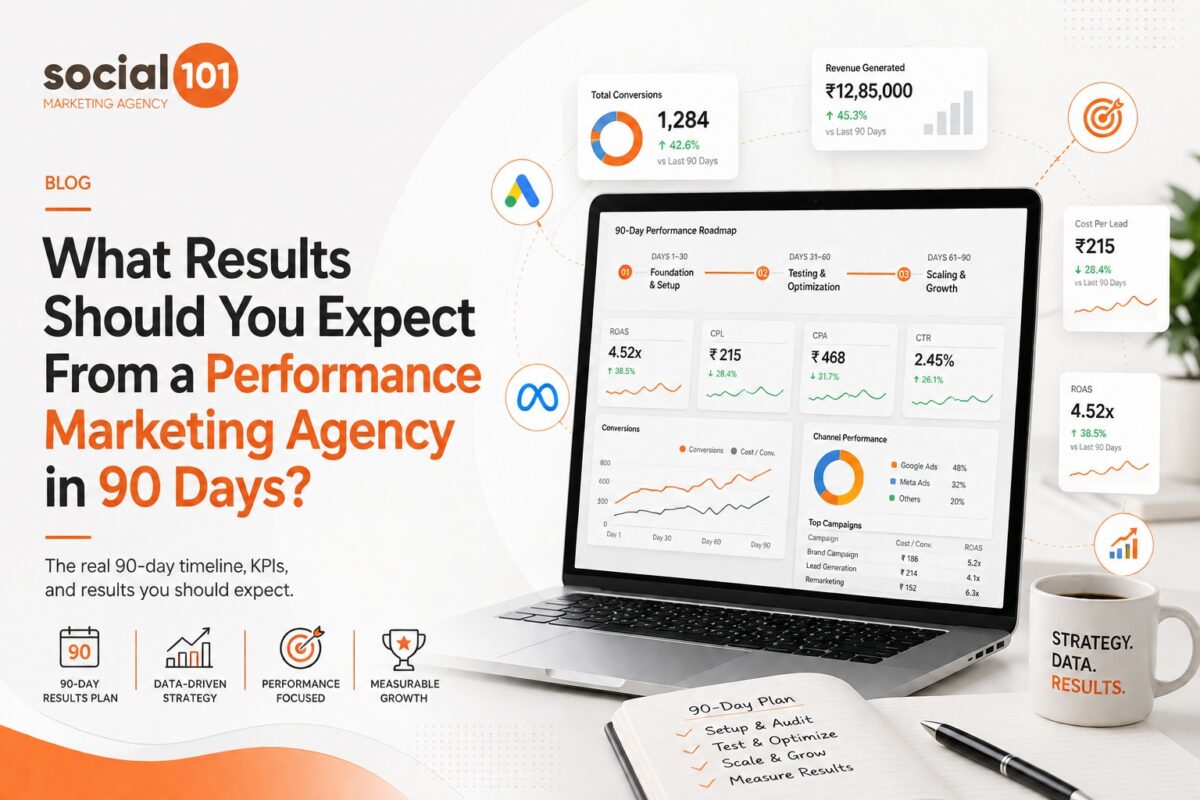
What Results Should You Expect From a Performance Marketing Agency in 90 Days?

Every business owner who signs on with a performance marketing agency asks some version of the same question in week one: “When will I start seeing results?”

It’s a fair question, and it deserves an honest answer instead of a vague promise. The truth is that a serious performance marketing agency doesn’t deliver a straight line of growth from day one. It moves through distinct phases each with its own goals, metrics, and deliverables. Understanding this timeline is the difference between judging your agency fairly and pulling the plug just as the account starts to compound.

This is the realistic, month-by-month breakdown of what a competent agency should be doing in your first 90 days, what numbers should be moving, and what red flags mean you’re not being managed the way you should be.

Why 90 Days Is the Right Benchmark

Digital ad platforms like Meta and Google run on machine learning. Every campaign needs a learning phase, a period where the algorithm gathers enough conversion data to optimize delivery. Judging performance before this phase completes is like judging a new employee’s output on their first day.

Ninety days is also long enough to move through three distinct stages of a client-agency relationship:

  • Foundation and setup (weeks 1–4)
  • Testing and data collection (weeks 5–8)
  • Optimisation and scaling (weeks 9–12)

Any agency promising dramatic results inside week one, or asking for 90 days without showing you any interim milestones, should raise questions. If you’re still evaluating who to work with, this buyer’s checklist for choosing a performance marketing agency is a good place to start before you sign anything.

Month 1 (Days 1–30): Foundation, Audit, and Setup

The first month is rarely about running ads that generate revenue. It’s about building the infrastructure that everything else depends on. Skipping this stage is the single biggest reason performance marketing campaigns underperform.

What should be happening:

  • Account and pixel audit: reviewing existing ad accounts, Google Analytics, Meta Pixel, and conversion tracking for gaps or misfires
  • Conversion tracking setup: implementing server-side tracking (Conversions API), UTM structures, and goal tracking so every rupee spent can be attributed correctly
  • Competitor and market research: understanding what’s already working in your category, especially useful if you’re comparing Meta Ads and Google Ads as your primary channel
  • Creative and copy development: building the first batch of ad creatives, landing pages, and offers to test
  • Campaign architecture structuring campaigns, ad sets, and audiences based on your funnel stage, not guesswork

What you should expect to see: Low ad spend, minimal conversions, and a lot of reporting on setup progress rather than sales. This is normal. If your agency is spending your full monthly budget in week one without any tracking infrastructure in place, that’s the actual redflag, not slow results.

Realistic KPIs for Month 1: Tracking accuracy, campaign launch readiness, creative approval rate, and cost-per-click benchmarks against industry averages.

Month 2 (Days 31–60): Testing, Data Collection, and Early Signals

This is where the account starts generating real data and real learning. A good agency treats this month as a controlled experiment, not a scaling sprint.

What should be happening:

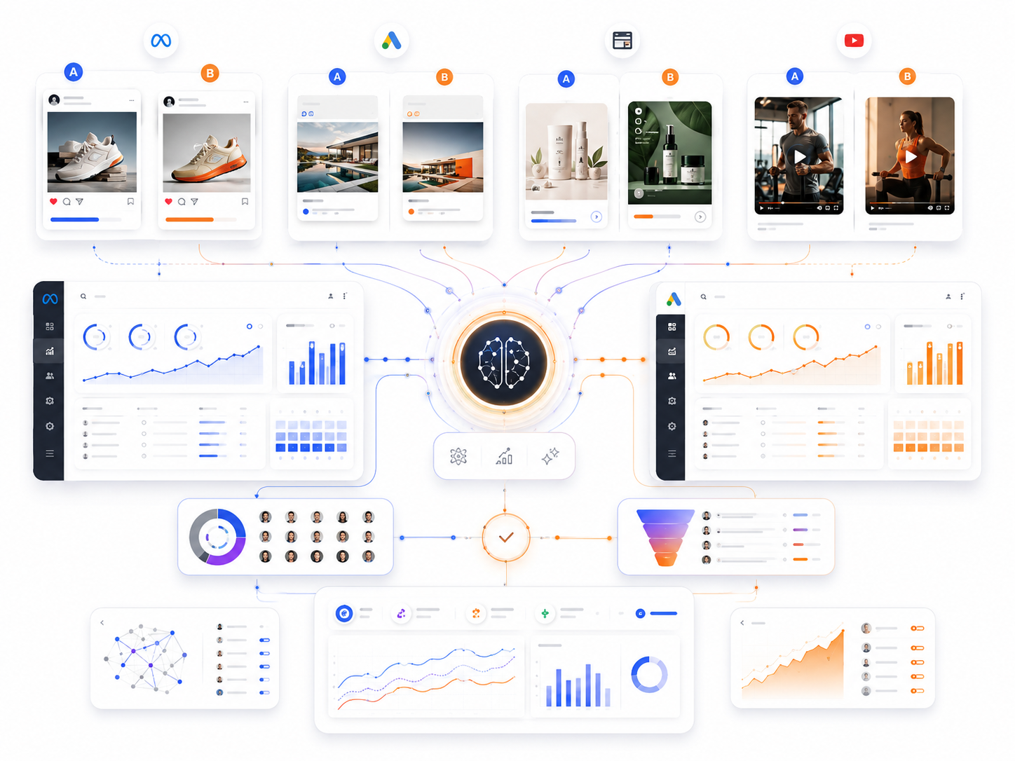
  • A/B testing across creatives, audiences, headlines, and offers to identify what actually converts
  • Budget reallocation away from underperforming ad sets toward early winners
  • Landing page optimisation based on bounce rate and time-on-page data
  • Weekly or bi-weekly reporting showing cost-per-lead (CPL), cost-per-acquisition (CPA), and click-through rate (CTR) trends
  • First retargeting campaigns to recapture visitors who engaged but didn’t convert

What you should expect to see: Cost-per-lead figures are starting to stabilize, a handful of creatives are clearly outperforming others, and CPA numbers are still higher than your target but trending downward. Lead volume typically starts picking up in weeks 6–8 as the algorithm exits its learning phase.

Realistic KPIs for Month 2: CTR improvement of 15–30% over Month 1 baselines, CPL trending toward target range, and 3–5 validated creative or audience “winners” identified from testing.

If you’re weighing whether this spend is better used on brand-building instead, this comparison of performance marketing vs branding explains how the two actually work together rather than compete for budget.

Month 3 (Days 61–90): Optimisation and Scaling

By month three, the guesswork should be largely gone. The agency now has enough data to make confident, not speculative, decisions.

What should be happening:

  • Scaling winning campaigns by increasing budgets on proven ad sets without breaking the algorithm’s learning phase
  • Cutting dead weight pausing creatives, audiences, or keywords that never found traction
  • Full-funnel campaigns covering awareness, consideration, and conversion stages together
  • CRM and sales-team feedback loops to confirm which leads are converting into actual paying customers, not just form fills
  • Monthly strategic review presenting cost trends, ROAS (return on ad spend), and a plan for the next quarter

What you should expect to see: CPA at or near your target, a clear ROAS figure you can hold the agency accountable to, and a documented list of what worked so those learnings compound into month four and beyond. This is typically the point where a business can decide whether to keep managing marketing in-house or hand it fully to an agency, a decision covered in more depth in In-House Marketing Team vs Marketing Agency.

Realistic KPIs for Month 3: ROAS benchmarks specific to your industry (typically 3x–5x for e-commerce, lower for high-ticket B2B and real estate), CPA within 10–15% of target, and a repeatable creative testing process the agency can run every month going forward.

A Quick Reference: What “Good” Looks Like by Month

TimeframePrimary FocusRealistic Outcome
Days 1–30Tracking, setup, creative developmentInfrastructure ready, minimal conversions
Days 31–60Testing, data collection, retargetingCPL stabilising, early winners identified
Days 61–90Scaling, full-funnel campaignsCPA near target, clear ROAS, repeatable process

Red Flags: Signs Your Agency Isn’t Managing This Timeline Properly

Ninety days is enough time to tell the difference between an agency that’s building something durable and one that’s just spending your budget. Watch for:

  • No conversion tracking discussion in Month 1: If nobody mentions pixels, UTMs, or attribution in the first few weeks, the rest of the reporting will be unreliable
  • Vanity metrics without context: reach and impressions reported as wins without connecting them to leads or revenue
  • No creative testing: running the same one or two ads for the full 90 days instead of iterating
  • Reluctance to share raw ad account access: a transparent agency gives you visibility into Meta Ads Manager and Google Ads directly
  • No agreed-upon KPIs before campaigns launch: if targets weren’t set at the start, there’s nothing concrete to measure against at day 90

If you’re currently evaluating agencies against these standards, this breakdown of what separates a strong performance marketing partner in Surat covers the questions worth asking before you commit a budget.

How Social 101 Structures the First 90 Days

At Social 101, every performance marketing engagement follows this same three-phase structure: audit and setup, test and learn, and optimize and scale because it’s the only approach that produces numbers you can actually trust by day 90. We report on tracking accuracy and creative testing in month one, not just spend. We share cost-per-lead and CPA trends transparently every two weeks. And by month three, you get a documented playbook of what worked, not just a bill.

If you’re comparing agencies or deciding whether performance marketing is the right next step for your business, get in touch with our team for a straightforward conversation about what a 90-day plan would look like for your category and budget.

Frequently Asked Questions

How much should I budget for the first 90 days with a performance marketing agency?

Budget depends heavily on industry and competition, but most agencies recommend keeping the first month’s ad spend conservative, often 60–70% of your steady-state budget since it’s being used for testing rather than scaling.

Is it normal to see zero sales in the first two weeks?

Yes. Tracking setup, creative approval, and the platform’s learning phase typically mean the first 10–14 days show minimal to no conversions. Sales activity should start appearing from week three onward.

What’s a realistic ROAS to expect by day 90?

This varies by industry e-commerce brands often target 3x–5x, while high-ticket categories like real estate or B2B services may see lower ROAS numbers but higher absolute deal value. Your agency should set an industry-specific benchmark with you before launch, not after.

Should I switch agencies if I don’t see results in 90 days?

Only if the agency can’t show you the underlying data tracking accuracy, testing history, and CPL/CPA trends. If those numbers are moving in the right direction even without a final ROAS win, that’s usually a sign to continue rather than restart the learning phase with a new team.

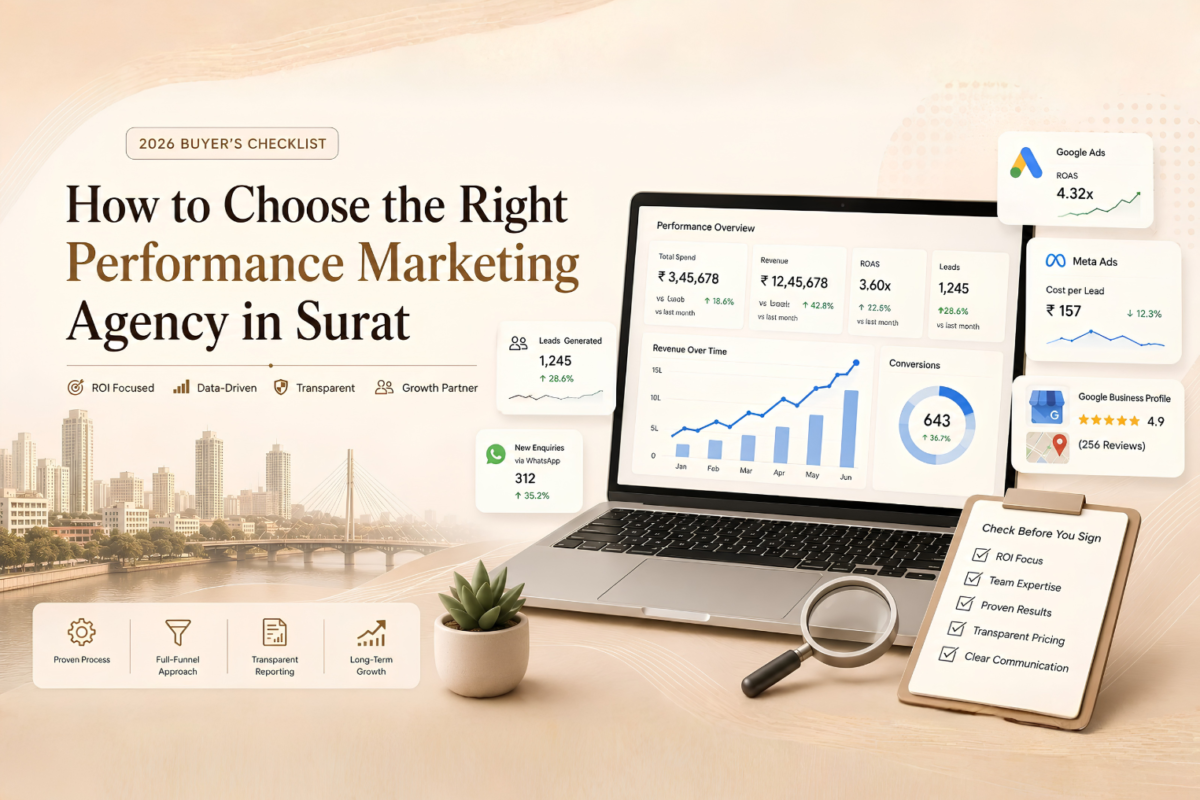
How to Choose the Right Performance Marketing Agency in Surat (2026 Buyer’s Checklist)

Ad budgets in Surat have gone up sharply this year. Dentsu’s 2026 India advertising report points to digital ad spend in the country crossing ₹69,856 crore in 2026, and a growing share of that is coming out of Surat’s textile units, diamond and jewelry houses, real estate developers, and a fast-growing list of D2C brands (source). The challenge isn’t finding an agency willing to take that budget Surat has dozens. The challenge is telling a genuine performance marketing partner apart from a vendor who will run your ads for six months before anyone notices nothing actually converted.

This isn’t another “we’re the best agency in Surat” post we’ve already made that case in detail here. This is the checklist to run before you sign a retainer with anyone, including us.

Why “Performance Marketing Agency” Means Something Different to Everyone in Surat

Almost every agency in the city now lists “performance marketing” on its homepage, but the term gets stretched to cover anything from boosting an Instagram post to running a fully attributed, revenue-tracked Google and Meta funnel. We’ve written a full explainer on what the discipline actually involves in our agency deep-dive, and a separate breakdown on performance marketing vs. branding spend if you’re still deciding where your budget should go at all. If you’re unsure whether to start on Meta or Google first, that’s also covered separately. For this guide, assume you’ve already decided to run paid performance campaigns the question now is who runs them for you.

The Surat Context: Why Local Market Knowledge Isn’t Optional

Surat’s buyer behavior doesn’t map cleanly onto generic playbooks built for Mumbai SaaS startups or Delhi D2C brands. A diamond and jewelry export business converts on trust signals and relationship cues that a quick-commerce campaign never has to deal with. The textile and saree trade runs on a completely different content and inquiry cycle. And a real estate developer is optimizing for booked site visits, not add-to-carts. An agency that hasn’t run campaigns in your category will spend your first two or three months and your budget learning what should already be known. Before you sign, ask any shortlisted agency for examples specific to your industry, not generic dashboards.

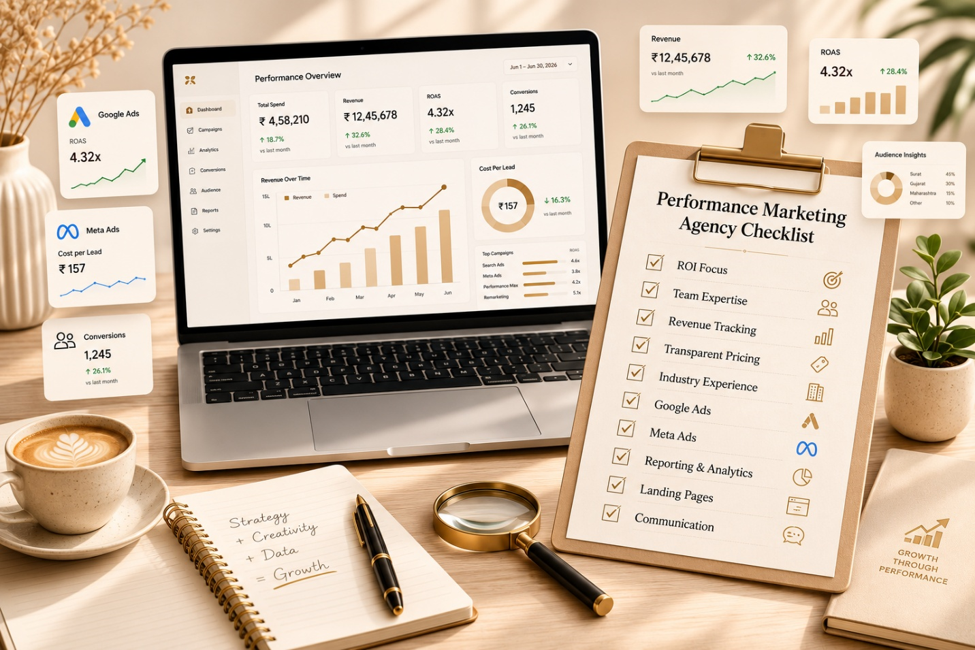
The 2026 Checklist: 10 Things to Evaluate Before You Sign

Run every agency you’re considering through these ten questions. Most will fail at least a few.

1. Do they optimize for revenue, or for clicks?

Ask what KPI is tied to their fee. Modern ad platforms make ROAS and CPA visible from day one through Google Ads and Meta Ads Manager. If a proposal leads with reach and impressions, that’s a branding pitch dressed up as performance marketing.

2. How many specialists actually touch your account?

A media buyer, a performance-creative person, and a landing-page/CRO specialist are three separate skill sets. One generalist juggling all three across eight other client accounts means your campaign gets whatever attention is left over.

3. Can they show category-specific proof, not generic screenshots?

Jewellery, textiles, real estate, and BFSI all convert differently in this market. Ask for case studies from your exact vertical and ask to speak to that client directly.

4. Do they own the full funnel, or just the ad account?

Ads, landing pages, tracking, and CRM/remarketing should sit under one accountable team. Proper conversion tracking through Google Analytics and platform pixels needs to be set up before spend starts, not patched in after the first report looks weak.

5. Is their reporting in rupees or in vanity metrics?

A monthly report should show cost per lead or sale, ROAS, and revenue contribution, not just CTR, reach, and engagement.

6. Are pricing and minimum budgets explained transparently?

You should get a clear fee structure and an honest minimum media budget for your category. As ad auctions get more competitive, India’s digital ad revenue has climbed every year since 2018; a budget that worked in 2022 often underperforms in 2026. Most Surat businesses now start at ₹50,000–₹100,000 per month in media spend alone, separate from agency fees.

7. Do they have visible, checkable work?

Ask for client references or a portfolio you can verify independently, not just testimonials sitting on the agency’s own website.

8. Do they specialize in the platforms that matter for your business?

Google Search, Shopping, and Performance Max; Meta; LinkedIn for B2B; and YouTube all need different skills. Make sure the platforms in the pitch match where your actual buyers spend time.

9. How is communication structured?

Is there a single point of contact and a documented escalation path for when tracking breaks, creative approvals stall, or budget pacing goes off track? Vague answers here usually show up later as missed weeks.

10. Are they pitching a growth partnership or a short vendor contract?

Performance marketing campaigns in month four or five should already be using earlier data to sharpen targeting and creative. Be cautious of any agency that frames the relationship as one-off campaign delivery. If you’re still weighing this against building an internal team, that comparison is covered here.

Red Flags That Should End the Conversation

  • “Guaranteed” leads or sales within days, with no questions asked about your margins or sales cycle
  • Reports that only ever show impressions, reach, and “engagement”
  • Reluctance to name the industries or clients they’ve actually worked with
  • Contracts that don’t give you ownership of your own Google and Meta ad accounts
  • One person juggling strategy, media buying, creative, and reporting across every client they serve

What Should a Performance Marketing Budget Look Like in Surat in 2026?

India’s overall advertising spend is forecast to grow significantly through 2026, and Statista’s tracking of India’s digital ad revenue shows the same multi-year climb. In practice, that means rising competition inside Google’s and Meta’s ad auctions; the same monthly budget buys fewer impressions and clicks than it did two years ago. A media budget that’s too small gets consumed by minimum viable testing before it ever produces a stable cost per acquisition. Ask any agency what they’d consider the realistic floor for your category, and treat a number that sounds too low as a warning sign rather than a bargain.

How Social 101 Measures Up Against This Checklist

We built this checklist from the same questions serious Surat business owners have asked us before signing. In short, Social 101 reports on ROAS, CPA, and revenue rather than vanity metrics; runs a 40+ specialist team instead of a single generalist; has worked across textiles, jewelry, real estate, BFSI, and D2C inside and outside Surat; and owns the funnel end-to-end ads, creative, landing pages, tracking, and CRM. For the complete breakdown of our team structure, client numbers, and full-service capabilities, read why we’re positioned as Surat’s performance marketing agency, or see the full list of services we run in-house.

Frequently Asked Questions

How long should I spend evaluating an agency before signing?

Two to three weeks is usually enough to run shortlisted agencies through this checklist, check references, and compare proposals. Rushing this step is the single most common reason businesses end up switching agencies within six months.

Should I hire an agency that only runs Meta or Google ads or one that does both?

It depends on where your buyers actually are, but most Surat businesses eventually need both channels working together with shared tracking and budget logic, rather than two separate vendors reporting in isolation.

What’s a realistic monthly retainer for performance marketing in Surat in 2026?

Agency fees vary by scope, but expect a separate media budget on top of the retainer. Most categories need at least ₹50,000–₹100,000 per month in ad spend alone to generate enough data for genuine optimization.

Can I move my ad accounts to a new agency without losing past data?

Yes, as long as you own your own Google Ads and Meta Business accounts from the start another reason account ownership belongs near the top of your evaluation checklist.

Is performance marketing a substitute for SEO?

No. Performance marketing produces faster, more controllable results, while SEO compounds slowly and keeps working without ongoing spend. Most growing businesses eventually need both, run by a partner who understands how they support each other.

Final Word

The right performance marketing agency in Surat isn’t the one with the loudest “best agency” claim it’s the one that survives every question on this checklist without flinching. Run your shortlist through it before you sign anything.

If you’d like a second opinion against this exact checklist, book a strategy call with Social 101, or browse more Surat-focused marketing guides on our blog.